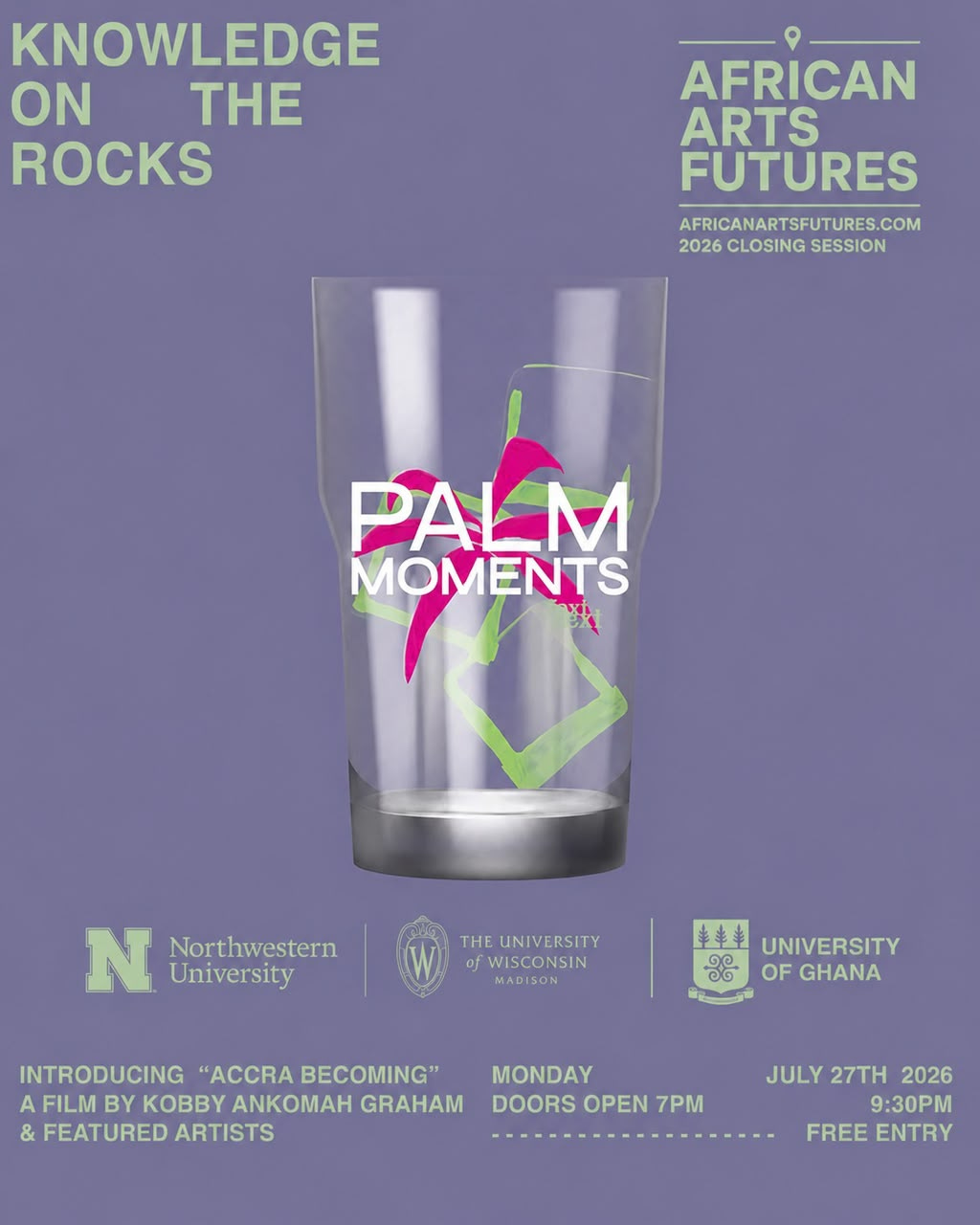
Knowledge on the Rocks
Lectures in a bar: Accra style.

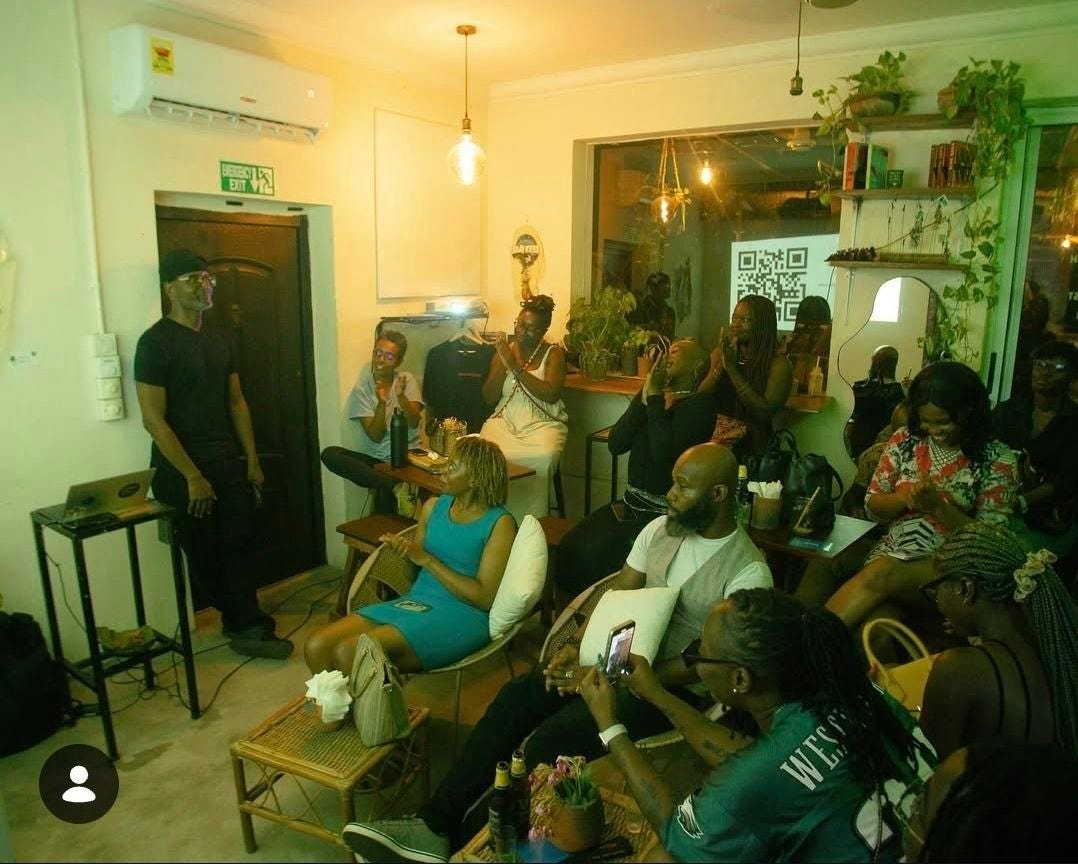
Some time in 2024, a number of former students started sending me Instagram videos of professors in New York giving lectures in bars, pleading with me to do something similar in Accra.
I can see why they thought of me: when Black Panther came out in 2018, the class that had graduated from Ashesi three years prior petitioned the school for use of its bus to drive us up the (famously unforgiving) road to Berekuso, where they had me host a class - on a Sunday, no less - in which we had fun breaking down the movie's many themes.
“I could do this all day…”
What my students were sending me was Lectures on Tap: professors and experts delivering talks (on everything from the psychology of infidelity to the history of cannabis). The concept is simple: take a thinker, give them a mic, drop them into a bar, and have them hold the interest of a room of drinkers for forty minutes.
An Idea Whose Time Has Come
The seed for doing an Accra version had been sprouting for a while.
In 2025, I was invited to Stanford University's Department of African and African-American Studies (DAAAS) to deliver a three-part lecture series over two weeks on a subject of my choice.
I called it Afrobeats as an Alté(rnative) History of Ghana, and used it to trace a political history of Ghana through the story of each era of highlife - from palmwine to burger highlife through hiplife and azonto, all the way to asakaa and beyond - asking what happens when you follow beats instead of borders.
The way I see it, our music doesn't respect the categories we impose on it and neither do the artists who make it. When we stop asking whether highlife is Ghanaian or Nigerian, and start asking what it carries, to where, and what gets transformed on its way there, you end up with a bigger, far more interesting account of who we are and where the music is going.
After the presentations, my gracious host (and hero) - Professor Ato Quayson - urged me to tour with my slides. So when Palm Moments reached out about launching a Lectures on Tap-style format aimed at combining the culture with a dash of academia, who was I to say no?
Palm Moments is actually important to my research. It follows in the lineage of Republic and Tea Baa: two spots that, at different times in Accra’s recent history, have held down our city’s alté(rnative) scene before it became the growing thing it is today. If you felt joy around Tea Baa’s return, you’ll probably recognize the kind of space that Palm Moments is trying to protect. As the kids say, if you know you know...
Bars and Benches
The Palm version of my lecture was a stripped-down remix of what I presented at Stanford. There, I had between 90 and 120 minutes for each lecture. For this, I had one lecture that could run for no more than 60.
Yie.
I somehow whittled 150 slides down to 50, restructured the flow, and shifted the tone from thesis defence to something a bit more drink friendly.
I arrived unsure of what to expect. Accra is unpredictable, chale. Even the best events can get disrupted by traffic, random acts of dumsor, or by the simple fact that people here work hard and are tired after working hustles upon side hustles.
Palm Moments is modest in size, but by the time I picked up the mic and persuaded my laptop to play nice with the projector, the place was already filling out.
And then it packed out, as people literally brought in benches from outside to occupy the spaces between the chairs. Those who couldn’t get in stayed outside and listened over the speakers.
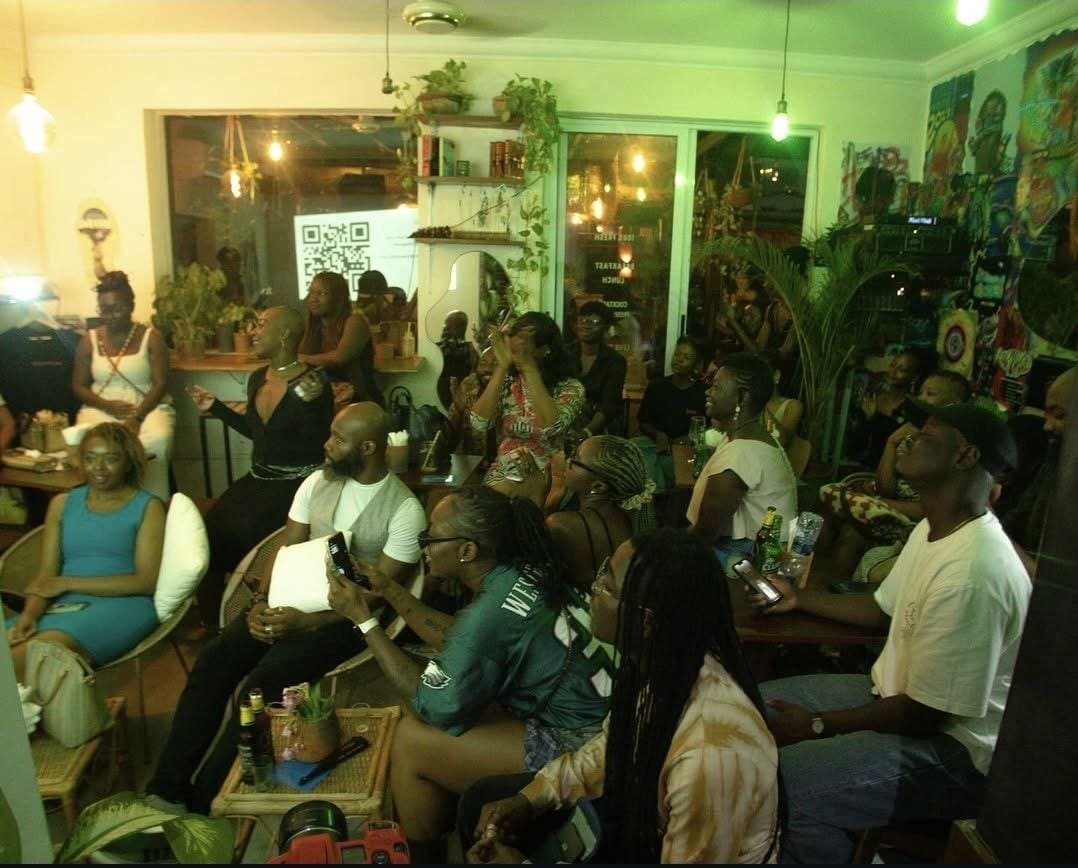
The mood was attentive and warm. Afterwards, an esteemed academic who attended said it felt like watching me receive peer review from my actual peers.
Peer review is an extremely important part of the academic process where your work gets pressure-tested by academics qualified to challenge it.
Too often though , academic research is produced for audiences far removed from the people and communities it draws from. Information gets extracted, packaged and archived, but rarely returned. This can create fatigue and suspicion: there’s a novelty in being studied, but it wears thin when you’re researched again and again, and nothing seems to change. Especially when policymakers barely engage with the wealth of knowledge our nation’s researchers generate.
Sometimes I feel my work is interesting to the academy, but somewhat alien to its existing frameworks.
But the Q&A that night felt like a review by peers who knew the culture as lived experience. They asked things I hadn’t considered and made connections I hadn’t mapped, helping me see my own work with new eyes. Some of what came up that night has since found its way back into my research.
I’ve always thought of myself as a cultural practitioner first, and an academic second. That night, it felt good to be told by one of my favourite audience members that I was equally both.
No one cared about my professional affiliations or publications. While those things do matter, what mattered here was whether the ideas felt true. Whether they moved people.
And apparently, they did.
After the event, videos started circulating online and messages started pouring in:
“When are you bringing this to Kumasi?”
“Can we host you in Nairobi?”
“Will there be a London edition?”
Anything is possible. If you want me to come lecture in your city, invite me and let’s find a way to make it happen.
What Happened Next
Late last year, my best friend Nana Darkoa Sekyiamah used KOTR to soft launch to a lucky audience the research behind her new book, Seeking Sexual Freedom.
Given the number of people who cried up a storm in my DMs over missing the first one, we ran it back in December with three sessions: two based on the lecture they missed, plus a bonus third: Azonto vs. Afrobeats: Did Ghana Drop the Ball?
This year, we have kept the knowledge moving.
In Your Ancestors Went to Therapy (& You Should Too), writer-DJ Araba Ofori-Acquaah visited to make the case that therapy isn’t a Western invention.
Last month, we collaborated with Imperial College London on The Gap Between Brilliant Research and Anything Actually Changing.
And just last week, The Buchei Collective opened July with Soft Life... At What Cost?: a feminist interrogation of who the soft life works for, who’s actually doing the labour behind it, and whether rest is as accessible as the aesthetic suggests.
Two More for July
This Wed (July 22) we are hosting a presentation by Robert Akoto Amoafo titled Sexy Man No Be Soft Man in which he promises to take us places most men’s panels don’t: desire, vulnerability, intimacy, and the cost of performing macho confidence you don’t actually feel.
On the 27th we will be previewing my upcoming documentary Accra Becoming as part of the African Arts Futures Symposium: a two day gathering coordinated by scholars from Northwestern, the University of Wisconsin-Madison and the University of Ghana, looking at the infrastructures and ecosystems African creative practice needs to thrive.
The documentary follows nine Ghanaian creatives I first interviewed in 2018 about money, family, community and what they believed their art was for.
Eight years later, I went back and asked them the same questions.
The session will include clips from the documentary and a conversation about the work.
We’re Not Alone
KOTR is part of a broader phenomenon. The awesomely-titled Drunken Lectures has been running in Nairobi since early 2025, also inspired by Lectures on Tap (as mentioned in this great piece).
Closer to home, I am also seeing Accra After Class doing similar work. I say the more the merrier. We all need this, especially now.
The humanities seems to have spent the last decade in retreat: department and funding cuts, programmes being consolidated, and having to justify their existence in the language of employability and economic output.
Ideas can live in institutions, but the ones we have have long struggled to hold them, and - in the age of AI - it’s only getting worse.
My honest bet is that the humanities’ best future home isn’t fully outside institutions or fully inside them, but in small, mission-specific institutions built by the scholars themselves rather than inherited from colonial-era universities.
Bars are not that, but - at the very least - they afford academics to bring research to the people and give people access to information they might find useful that would otherwise pass them by.
Events like Knowledge on the Rocks invite us all to imagine what knowledge sharing could look like if it moved horizontally, instead of being top-down; if it wasn’t limited to those who can afford tuition, but flowed instead into the places where people gather, argue, dance and dream.
I sincerely believe that there’s power in that.
If you are interested in presenting a session at Knowledge on the Rocks, sign up here. And do follow Palm Moments to keep up with everything happening there.