
We Are Better Together
Notes on the Diaspora Wars, on Ghana’s 69th Birthday

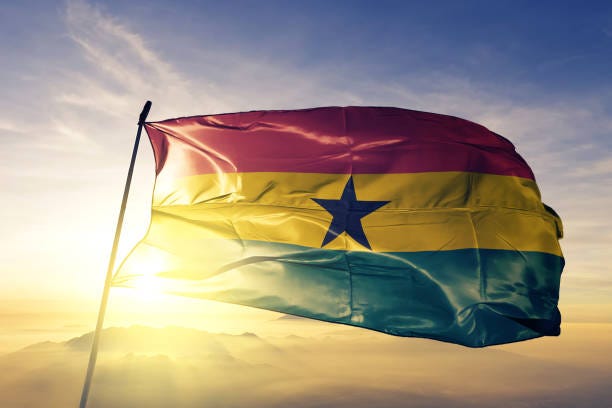
The latest edition of the popular Ghanaian podcast Sincerely Accra has had me in my thoughts since I listened to it yesterday: the day before Ghana’s 69th independence day anniversary.
The section that’s haunting me is a conversation between host Joseph Nti and producer Mr. Kwame about Ghana’s diaspora wars: those high-heat arguments that resurface every time a Ghanaian abroad posts the flag, or whenever Ghanaians in Accra watch prices triple in December.
I’ve been wanting to put words to this for a while, and independence day feels like the right time, because the argument is - at its core - about what it means to belong to a country. And today is a good day to ponder such things.
I have a stake in both sides of this, but let’s get to that later. What follows is my attempt to be fair to both sides (including the parts neither side likes to hear).
We move.
Ghana vs. Ghana
The first thing to get straight is who is actually arguing with whom, because the diaspora wars could be framed as being between Ghanaians who chose to emigrate and Ghanaians who chose to stay, but the people who made that original choice are a small and largely ageing subset of the picture.
The diaspora being argued with (the ones doing The Face The Flag tings, crowding Kotoka in December, posting opinions about Ghana from cities like London) are overwhelmingly people born and raised outside Africa; descendants of people – parents, grandparents, great-grandparents - whose decisions weren’t the free choices they are at times made out to be.
Some families left because they wanted to. Others left because structural adjustment in the ‘80s and ‘90s had made life untenable: IMF conditionalities were not designed with Ghanaian workers in mind.
Others left because staying was dangerous. The coups, the AFRC period, the early PNDC years produced circumstances in which academics, journalists, lawyers, and union organizers and more faced genuine danger and detention (or worse). Those who could left quickly, with little, and no clear date of return, suitcases left to gather dust on top of wardrobes or under their beds.
Their children and grandchildren grew up in places like London, Milton Keynes, or Washington with a relationship to Ghana built only from stories, reaching toward a home never fully had.
That reaching might deserve more credit than it usually gets. That said, two things can be true at once. And the other truth is that the frustrations against them from those at home are very real.
No Exit Ticket
Some of us live in this country. Not in the glossy December Director’s Cut version of Accra, but in its unedited version: complete with dumsor, water cuts, a cost of living that only ever goes up, inadequate hospitals, and petitions and protests that end up going nowhere. The Ghanaian elite can absorb our country’s nonsensical prices, but everyone else can save for months and still find themselves priced out, especially during the Christian festive season.
We navigate these things every single day, and most cannot afford an exit ticket. So it’s annoying AF when someone lands in Accra in December and starts telling us what doesn’t work. We know what doesn’t work. And we are the ones forced to make it work regardless.
Yet when young Ghanaians hit the streets to protest things like dumsor, galamsey, bad governance, and state violence, our diaspora’s social media tends to be much quieter than it is on March 6th.
Ghanaians at home notice who shows up for the beautiful parts of Ghanaianness and who goes quiet when it’s costly, much in the same way that Black people worldwide notice when other cultures enjoy Black art but are silent when the people who make that art are being oppressed.
Of course, some solidarity is quiet. The money silently sent back to Ghana by Ghanaians abroad is more than all aid combined from countries that are much louder about that aid than they deserve to be (given their roles in making aid necessary in the first place: insert bombastic side eye here). Just the money constantly being sent home - to families, to causes, to institutions – isn’t shared online doesn’t mean it isn’t happening.
Visibility is also a resource though, and using it only for the celebratory moments is… a choice. One with consequences. The flag and the face on March 6th; the silence when the protest is being suppressed: that asymmetry is what home Ghanaians are pointing at, and it’s worth sitting with.
Nkrumah Would Have Found All This Depressing AF
The diaspora wars tend to forget two things simultaneously: that the people who stayed are the ones who built this country, and that Ghana would not be independent without its diaspora. You can see both of these things in the lives of people like Dr. Kwame Nkrumah, who was born, raised in, and shaped by Ghana but was also radically shaped by his years in the United States and Britain.
At least half of the intellectual framework of the Pan-Africanism that fostered Ghana’s independence was built by people not living on the African continent. Marcus Garvey gave a generation the language to imagine return. Du Bois mentored Nkrumah and organized the congresses that moved the idea from aspiration to agenda. Henry Sylvester Williams, a Trinidadian barrister, convened the first Pan-African Conference in London in 1900.
The Fifth Pan-African Congress in Manchester in 1945 was the turning point when the movement shifted from petition to demand for self-determination. Nkrumah was there, along with several other future African leaders. So was George Padmore: the Trinidadian who became one of his closest political advisers.
Pan-Africanism didn’t originate on the continent and travel outward. It emerged as much from the hardship of those on the continent as it did from the experiences of Black people dispersed by slavery, looking back at a continent they’d been severed from. Our diasporas co-architected the idea of African liberation, with the likes of Nkrumah being the ones who brought this new version of it back home. He would be confused and disappointed to see this unity collapse into the kinds of squabbles we see today.
Respect Those Who Stayed
And then there are the people who stayed and held things together through the decades that followed: the coups, the PNDC years, structural adjustment, HIPC. The long, grinding work of institution-building that produced the relatively stable democracy Ghana has today was done largely by people who did not leave. Teachers who stayed when their salaries were an insult. Doctors in public hospitals with no supplies. Journalists who reported under pressure. Activists who protested without a foreign passport in a drawer as a backup plan.
Yes: some of those people were also complicit in the things that went wrong. But the continuity of Ghanaian civic life was maintained by people who were present. The person who has navigated Accra’s systems for decades, who knows which institutions function and which are facades, who has built trust within communities over time: that person has a form of capital that cannot be acquired from abroad, but that gets underestimated by people arriving with foreign solutions to problems they’ve diagnosed from a distance.
Put some respeck on their name.
Highlife Already Knows
As usual, culture understands this balance, and did so long before politics did. Take highlife, for example. Try and imagine what it would sound like without our diaspora.
Ew.
Highlife has never been the product of home or abroad alone. From its palm wine beginnings, fusing Osibisaba rhythms with Caribbean calypso, brass band jazz with homegrown jams, everything about it is inherently Pan-African.
Burger highlife had roots at home but was born in foreign cities like Hamburg and London and Düsseldorf, where Ghanaian musicians fused old rhythms with synthesizers and sent cassettes and vinyl records home, full of sounds that would eventually feed directly into hiplife.
Without that loop there is no hiplife, and without hiplife no contemporary Ghanaian pop. Azonto broke in both directions simultaneously: the diaspora not just consuming but producing, building the global moment from both ends. Afrobeats followed the same logic.
The music has always known that the exchange is bidirectional, that the diaspora is not peripheral to the culture but woven into its structure.
Returneefuo
There is a category the diaspora wars rarely account for, partly because it doesn’t fit neatly into either team: the returnee.
I hold dual British and Ghanaian citizenship. I was born in London to two Ghanaians: one who returned, the other who didn’t. I spent seven years in Cape Coast (including five at Mfantsipim), returned to the UK for my A-levels and two university degrees, before moving back to Ghana twenty years ago.
I grew up being mocked for being African in London at a time before azonto, afrobeats, and Black Panther, when it was considered something to apologize for, before ‘Black British’ became as African as it is Caribbean. I know what it is to romanticize home from a distance. And I also know exactly how irritating it can be when someone arrives with strong opinions about a place they don’t stay in.
People abroad who come back occupy an uneasy position that the diaspora wars don’t always have a language for. At home, you are constantly told, directly or indirectly, that you are not a real Ghanaian, whatever the f*** that means. I remember being asked once in a job interview what keeps me from leaving. Or being asked, “why did you come back?”
I get it.
Abroad, I had faced concerned pity when I told people I was moving home: “you’re doing what?” For some in the diaspora - especially our elders - leaving Africa was the achievement. And if we’re being honest, the Ghanaian Dream still includes an element of jakpa. Going back voluntarily reads, to some, as not understanding what you have. The returnee who argues that home is liveable and worth building gets looked at with a kind of bafflement from both directions.
The experience is even sharper for women, who come home to find that the argument about belonging is overlaid with uninvited questions and opinions that men largely don’t face in the same form. The diaspora woman who has built a career abroad returns to be assessed against a domestic checklist that revolves around marriage, children, and subservience. The inverse sometimes applies too: the assumption that the women raised at home are somehow less liberated, as though geography is the same as consciousness.
Neither picture is accurate and none of this serves anyone.
The End of the World Is Not the Time for This
To put it very lightly: the diaspora wars are a luxury Africans cannot afford right now. Global superpowers are competing for influence on this continent. As though debt, military presence, and trade agreements with very fine print were not enough, at least one deeply deluded, incredibly powerful country is being openly applauded for calling for a return to colonial force. And you people want to sit here and fight over diaspora (and jollof)?
GTFOH.
Something specific has changed, and it matters whether you pay attention to it or not. For decades, there were international rules - imperfect and hypocritically enforced, but rules nonetheless - that meant countries couldn’t simply do whatever they wanted to smaller, weaker nations without at least some consequences.
Look at the news, wai: those rules are now effectively gone.
The powerful countries of the world have stopped pretending to be bound by them. What we have instead is a world where the strong are going back to doing what they like.
In this environment, the division between Ghanaians at home and the descendants of those who left has real consequences. African countries, on their own, are small players in a game being set by much larger ones. Together, this continent has genuine power: over a billion people, some of the world’s most critical natural resources, and geography that every major power wants access to.
That is leverage.
But leverage only works if you’re pulling in the same direction, and right now we are spending our energy on… this. The diaspora represents money sent home, skills, and connections in powerful economies that could be used differently. Ghanaians at home represent the people who actually build and run the country every day.
Separated, both are weaker than they should be.
Moving Different
Moving differently is not complicated to describe, but it’s hard to do.
For the diaspora: show up when it’s difficult, not just when it’s beautiful. If you claim the culture when it’s ascendant, claim the politics when it’s embattled. Think beyond investing in real estate: investing in businesses and skills is hard but it builds something, rather than just pushing up prices.
For Ghanaians at home: the diaspora’s love, even when clumsy, is usually genuine. The person doing The Face The Flag is trying to reach for something real. Mockery pushes people away. Patience brings them closer. You catch more flies with honey than with vinegar.
Just saying.
For both: These arguments happen on social media, but the solutions live in institutions. The changes we need aren’t individual problems: they are often structural ones. December prices aren’t set by our diaspora o. We do that. That conversation belongs here, and we should all be asking the government questions.
Reading history is not optional right now. It never was, but especially not now. Nkrumah didn’t just make speeches and appear on currency. He left us a body of work: on colonialism, on unity, on how power actually operates, on exactly the kind of moment we are living through.
If his name is on your lips but his books have never been in your hands, this is a good time to fix that. The same goes for Cabral, Rodney, Blouin, Fanon, Nyerere, Funmilayo Ransome-Kuti, Adelaide Casely Hayford, and all their peers. These are not ancestors to put on t-shirts. They are strategists who were about that life and did the thinking in advance, for precisely this kind of juncture, leaving the work behind for us. We would be considerably more ready for this moment if their texts were required reading rather than faces to put on merch.
Pan-Africanists like Nkrumah didn’t make the case for unity because it was easy. They learned the hard way that fragmentation — being killed one by one — was worse. The diaspora wars are a small version of that same failure: real grievances on both sides, being used as reasons to stay divided in ways that serve neither.
Sixty-nine years.
We’ve come too far and have too much further to go for this to be how we spend our energy. Independence day is a good day to sit with that. And Ghana month is a good time to do start doing something about it.
I want to sit with this piece more, but thank you for articulating these nuances. As a Ghanaian-Kenyan (one parent from each country) in the diaspora, who started my life on the continent, but was largely raised in the U.S., I've often felt these tensions. Like you, I do often return to Nkrumah's vision for uniting Africa. He understood that our power was from standing together, rather than being divided. That being said, to do that authentically requires honest acknowledgement of the rifts, healing and finding the way forward together, even if it's imperfectly done.
You catch more flies with honey than with vinegar.
I thoroughly enjoyed this line.
This was an amazing piece, Kobby. I came here on recommendation from Joseph's Instagram stories and I'm very impressed. You said the things which needed to be said and drew attention to what is important.
I'd be reading more Pan-African books because of you. Clearly, there's a lot I need to learn.
Keep up the good work!