
Too Busy (High) Functioning.
For Men's Mental Health Month.

Sometime in my late twenties, I promised my best friend’s grandmother – the woman who had housed me as a disowned teenager - that I would visit. The day came and I didn’t go: I no longer remember why. I told myself I would call to explain. I didn’t. Then she called me, and I felt terror in my gut, so I let my phone ring out. I told myself I would call her back.
A year passed.
She called a few more times. I felt the same fear and did not pick up. Shame accumulated with each missed call until it became a thing. A spiral. The more time passed, the more impossible any call became.
I had no explanation for what I was doing that made any kind of sense.
Then one afternoon, I stepped outside work (Joy FM at the time) and heard someone shout, “Ei Kobina! Long time no see.” There, stuck behind a traffic light, was my friend’s grandfather. The light changed and he shouted, “yɛ na bra fie!” and drove off.
I went that weekend, and - of course - Grandma was really happy to see me.
The thing I had been protecting myself from for a year - her disappointment, the moment her face would register that I had failed her - had never existed anywhere except inside my own mind.
I will turn forty-nine this year, and I am only now finding language for what that was.
Are You Really You?
We sometimes struggle with looking at ourselves directly. We develop workarounds so precise and so functional that they stop looking like workarounds.
They become personality.
Most people who have met me would say I am quite sociable. I am apparently a good conversationalist. They express surprise when I tell them I experience anxiety. I respond to their surprise by telling them that I DJ not only out of a love of music, but because it allows me to be part of the party without having to talk to anyone.
What they see is a performance I have been unconsciously refining since my teens: knowing when to nod, when to interject, how to track enough of a conversation to appear present while my mind is often elsewhere entirely.
I leave rooms to make phone calls because taking them in front of others feels like performing before a judging panel. I have 99+ unread WhatsApp messages (and feel no particular stress about this). I have a productive window between dawn and noon that has not shifted since I was at university. Outside that window, I find it hard to get anything done. Not impossible, but very hard.
I used to tell myself that this was just how I was. My personality. My rhythm. An introvert in extrovert’s clothing. But life has recently taught me that these things are coping systems I have unknowingly built around a set of conditions I never examined because I was too busy life-ing.
A Better Map
I am always interested in better understanding myself, and there is something I hope to see a psychiatrist about soon; something that has affected me since childhood.
My parents divorced when I was seven. Before that, my father was sometimes loving and at other times randomly violent. Raised in that uncertainty, my brother and I learned as children to constantly try to gauge his mood. Yet, years later, we reflected that we were more afraid of our mother’s disapproval than we were of our father’s violence.
I have been reading emotional weather reports from women ever since. Most of my female friends don’t know it, but in the first few seconds of listening to phone calls or voice notes from them, I am anxious (especially if I have not contacted them in a while) until I hear them speak in a positive tone. Neither do they know that anxiety is part of why it takes me so long to respond to their messages in the first place.
Having lost my mother, my brother, and my father within a decade, I have done significant therapy in recent years. After hearing how my brother died, my boss at the time - a friend - paid for me to have two sessions with a therapist. Those sessions are part of why I am still here.
Before that, I had only seen one years prior - the late, lovely Dr. Araba Sefa-Dedeh - who identified what she told me was an irrational fear of confrontation. I now seek to understand the layer underneath that fear: not what my responses are, but what produces them.
In putting together a clinical picture of myself, I have had to think deeply about what my internal life actually looks like:
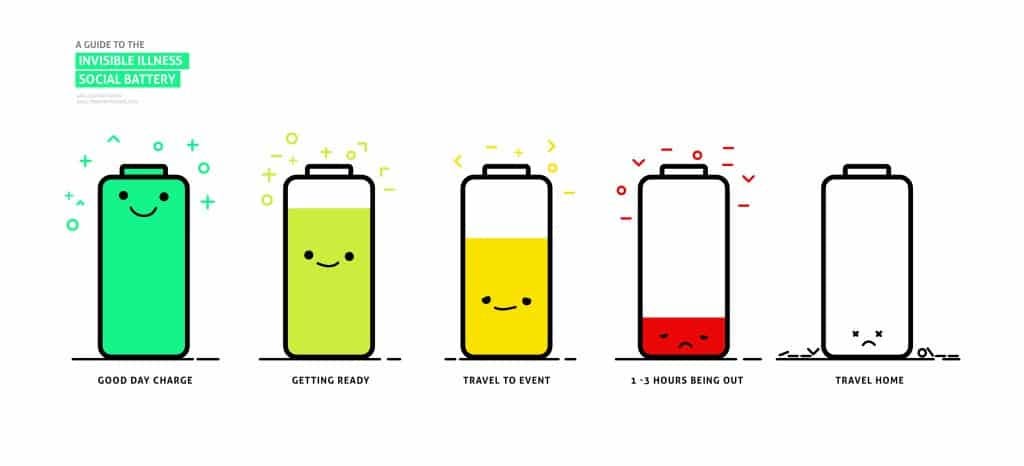
The freeze response I have to objectively simple tasks, be they a single email, a WhatsApp reply, or a phone call I keep meaning to make. Pushing myself to deadlines before I get things done. How suddenly my social battery runs out. The morning window outside of which I struggle to be productive. The masking. The shame spirals after small failures, disproportionate to their actual stakes; concentrated especially around women.
My best friend’s grandmother housed me for a year when I was a teenager and my father disowned me. She was, in other words, someone to whom I owed a lot. And I spent twelve months not answering her calls.
That pattern has a name in ADHD literature: rejection sensitive dysphoria (RSD). The trigger is apparently not conflict itself, but the anticipated moment of being diminished in someone’s estimation. It is not confrontation I am avoiding.
It is the look on someone’s face.
The Scaffolding
I am not broken: I am just human. And I am proud of the person I have made of myself. Like anyone, I have my flaws. But I do a lot of self-reflection, and I try to learn from my mistakes; to better myself.
An excuse I sometimes hear for not taking mental health seriously is that everybody has trauma, and that you just have to get on with it; that therapy is an indulgence for rich (white) people.
To my mind, that’s like saying everyone gets injured so there’s no point seeing a doctor. Or that everyone gets rained on so umbrellas are a luxury.
Hmm.
The architecture of our adult behaviour often has foundations we have not thought (or dared) to inspect. Sometimes for decades. Sometimes, it’s not “just how you are.” Sometimes it’s what you’ve built for so long that you can no longer see the scaffolding.
If you are a man and any of this feels familiar, maybe you too should look at what you have made of yourself, and consider whether there are other, better ways you can be. Not just for your own benefit, but for those around you too.
A Few Therapists I Personally Recommend
Dr. Anna Dzadey (GH)
Dr. Adwoa Nuro-Panin (GH)
Dr. Carol Mathias O’chez (GH)
Dr. Laurita de Diego Brako (GH)
Dr. Leyla Hussein (UK)
Very, very real, and thank you for sharing. But I have a question. How is the dawn-to-noon productive window part of your coping mechanisms? I'm guessing it's a response to something you've been through, but I can't figure out what.
I am a woman, and so much of this resonated! Thank you for sharing so generously, Kobby. 🥹🫶🏿